The semiconductor industry is currently experiencing rapid growth due to automation and technological advancements, which are increasing the demand for electronics. Consumer preferences and market competition for more powerful and compact electronics necessitate improvements in power, performance, and footprint minimization. To accommodate increased power and performance on compact semiconductor designs, new thermal management practices need to be in place, and hence, the semiconductor market leans towards the shift-left methodology.
Moreover, for effective thermal management, phase change materials (PCMs) have gained popularity due to their ability to absorb and release heat during phase transitions, thereby stabilizing thermal conditions. For studying and evaluating different PCMs for semiconductor cooling, computational fluid dynamics simulations have proven to be effective as they very well align with the shift-left methodology. This blog provides an overview of how CFD simulation serves as a powerful tool for studying the diverse aspects of PCM in semiconductor thermal management.
As power densities in semiconductor devices escalate, the thermal management of these components becomes a challenge. Degradation of performance, reliability, and system failure are the outcomes of high temperatures in semiconductor devices. To ensure that electronic devices perform within the designated operational limits, it is substantial to reduce thermal resistances and effectively dissipate heat.
For instance, elevated temperatures can trigger thermal runaway in power electronics or significantly shorten the lifespan of integrated circuits. Consequently, semiconductor fabrication must account for thermal considerations throughout the design process to minimize thermally induced defects and maximize yield.
The shift-left approach involves integrating thermal management considerations early in the design cycle, as opposed to addressing them at later stages. This proactive strategy enables engineers to identify potential thermal challenges during the initial phases of product development, leading to more informed design choices. For example, simulations can guide layout modifications to optimize airflow or select materials with superior thermal properties.
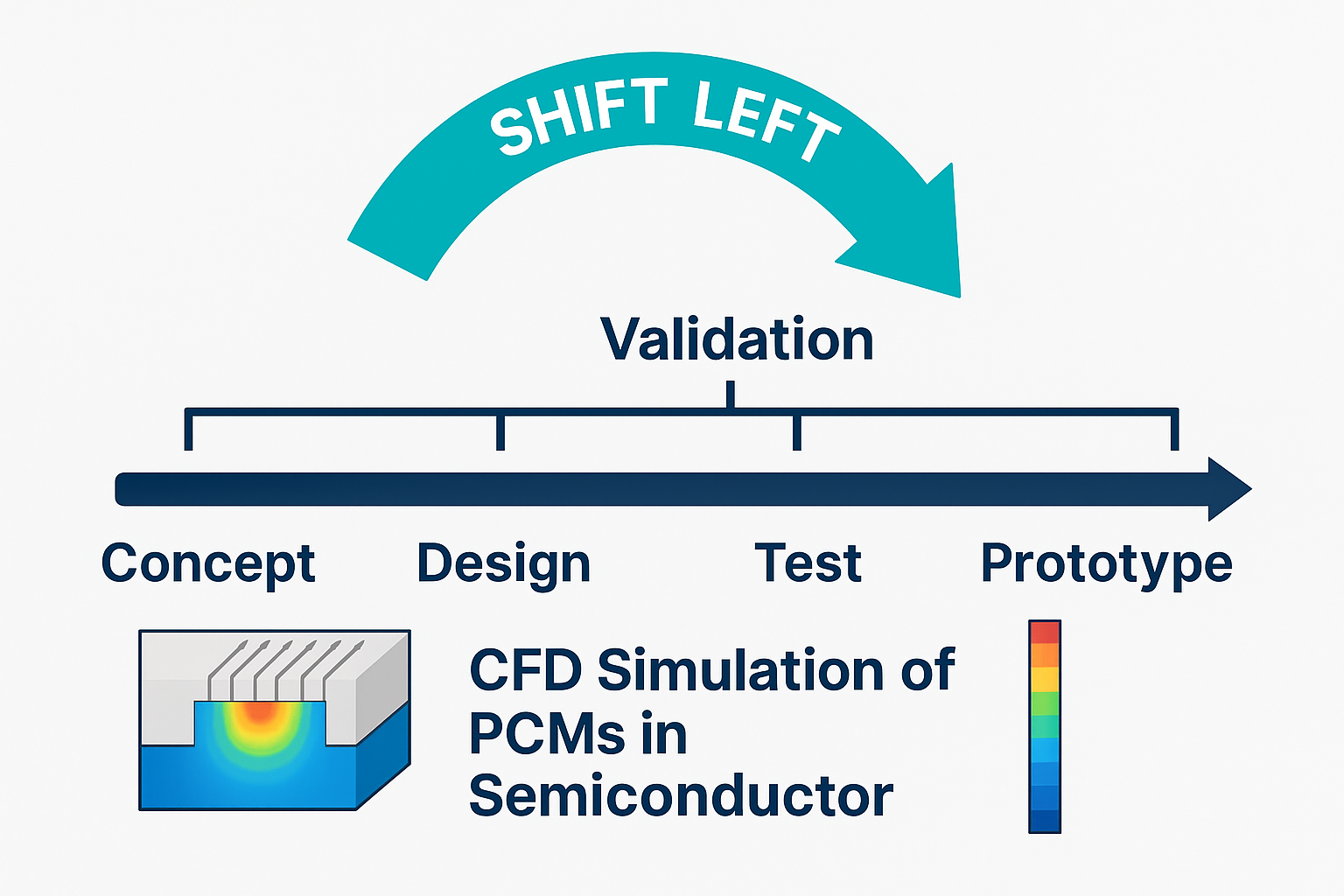
By embedding thermal design principles from the outset, stakeholders can also enhance system reliability and performance while reducing overall costs associated with retrofitting or redesign. Early identification of thermal bottlenecks allows for the refinement of cooling strategies, whether through improved heatsink designs or the incorporation of active cooling techniques.
PCMs offer a unique solution to thermal management due to their capacity to absorb significant amounts of heat during their phase change processes. This property allows them to stabilize temperatures over extended periods, making them invaluable in semiconductor applications where maintaining precise thermal profiles is critical.
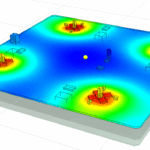
PCMs can store thermal energy in a latent form, seamlessly transitioning between solid and liquid states while maintaining near-constant temperatures. Recent advancements in PCM technology, such as the development of composite PCMs that enhance thermal conductivity and increase cycling stability, have further broadened their applications. They can be integrated into packaging materials, printed circuit boards (PCBs), and even embedded within chip designs to provide localized thermal regulation, thereby improving the reliability of high-performance semiconductors.
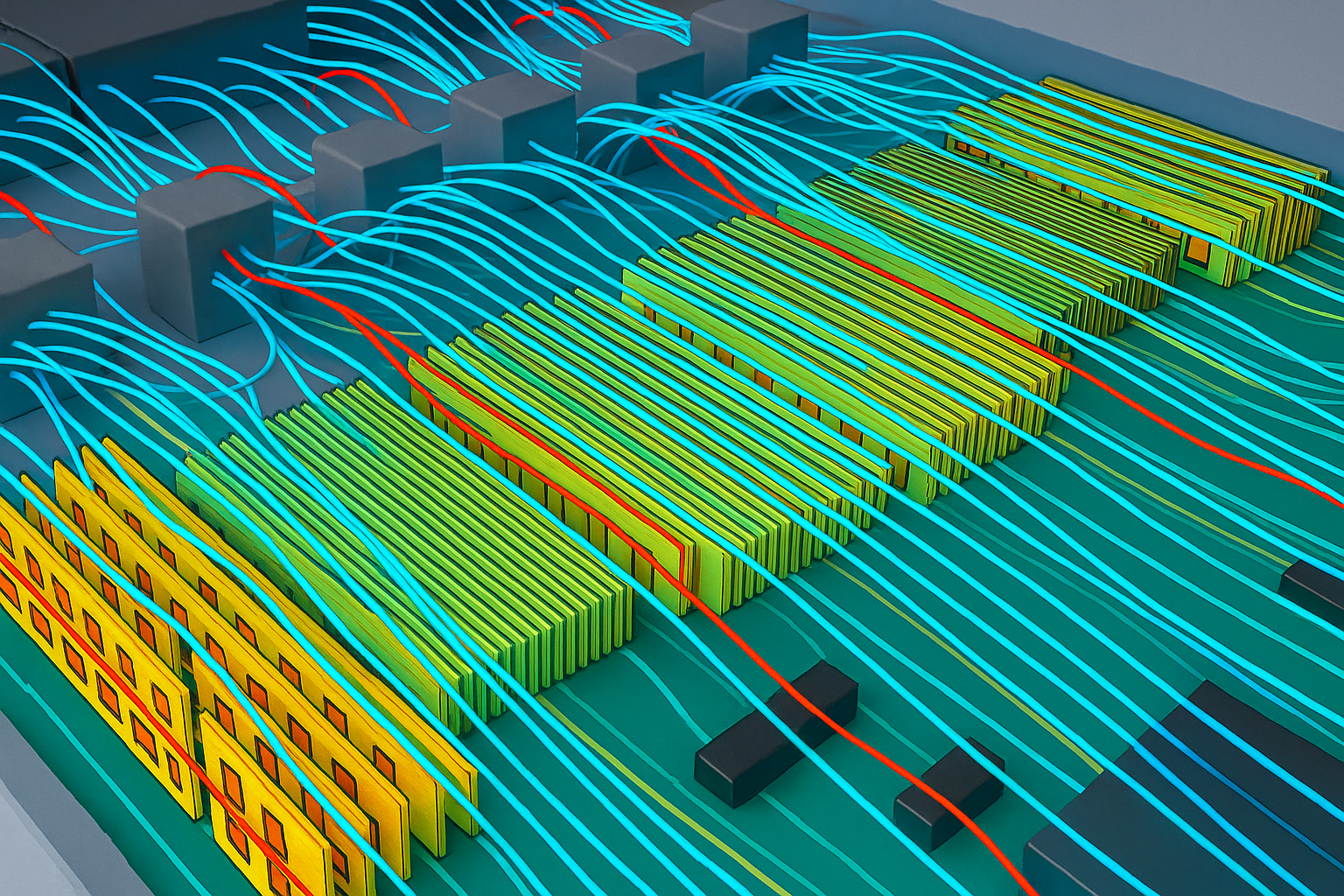
CFD simulations are a promising solution, aligning with the shift-left methodology, for optimizing PCM thermal performance in semiconductor applications. They enable researchers and engineers to model the intricacies of phase change dynamics, including nucleation, growth, and melting behaviors under various operating conditions. By leveraging CFD, one can visualize and analyse temperature gradients, flow distributions, and heat transfer mechanisms within multicompound systems involving PCM.
These simulations provide valuable insights into the optimal placement and thickness of PCM layers, the effects of external heat sources, and the system’s overall thermal response to fluctuating loads. Additionally, CFD tools can assist in refining PCM formulations, facilitating the exploration of different composites and additives that amplify thermal conductivity or modify phase transition temperatures to meet specific operational requirements.
AES provides expert support in conducting thermal management CFD simulations for PCMs in semiconductor devices. Utilizing advanced CFD techniques, we accurately model heat transfer and fluid flow, which are essential for achieving optimal performance.
Our simulations analyze the thermal behavior of PCMs under various conditions, thereby helping to design efficient thermal solutions that ensure effective heat dissipation and minimize the risk of thermal failure. By integrating our expertise in FEA and multiphysics with CFD simulations, we provide comprehensive insights tailored to our clients’ needs. Throughout the process, we prioritize collaboration, offering recommendations based on simulation results to align thermal management strategies with operational requirements. Our commitment to best engineering practices ensures that our simulation outputs correlate closely with empirical data, paving the way for reliable and efficient semiconductor devices. contact us now!
The importance of effective thermal management in semiconductor cooling cannot be overstated, as it fundamentally influences device performance, reliability, and longevity. The application of PCMs presents a promising solution for managing heat in increasingly compact and powerful devices, while CFD simulations offer a sophisticated method for analyzing and optimizing this technology.
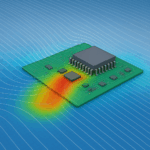
Looking ahead, the integration of advanced PCMs in semiconductor manufacturing, coupled with enhanced CFD modeling capabilities, promises a new era of thermal management strategies. This synergy will not only foster innovation in semiconductor design but also enable manufacturers to push the boundaries of performance, efficiency, and reliability in this rapidly evolving industry.