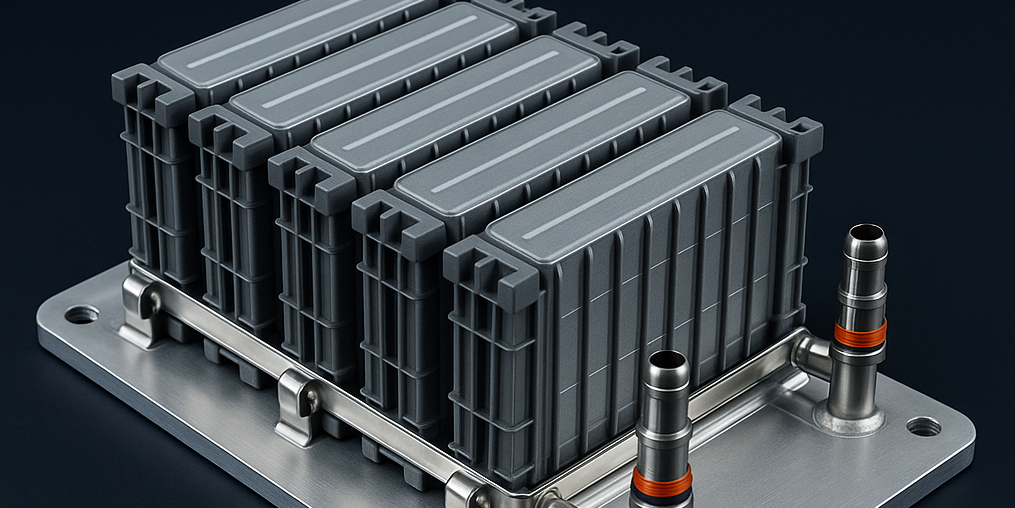
With the rise of electric vehicles (EVs), renewable energy storage, and portable electronics, battery packs have become a critical technology underpinning modern power needs. Designing battery packs that balance performance, safety, cost, and durability is a complex challenge requiring a multifaceted approach. Simulation-driven design optimization offers a powerful solution to this challenge, allowing engineers to refine and perfect battery pack designs in a virtual environment before any physical prototype is made.
Simulation-driven design optimization involves using computer simulations to model and analyze different design variables and configurations. Instead of building and testing multiple physical prototypes, engineers run virtual experiments to evaluate performance metrics such as thermal management, structural integrity and electrical efficiency. Optimization algorithms then identify the best design parameters that meet multiple objectives and constraints.
At Advanced Engineering Services, We use this approach accelerates development, reduces costs, and enhances the final product’s quality by systematically exploring design trade-offs that would be difficult or impossible to test physically.
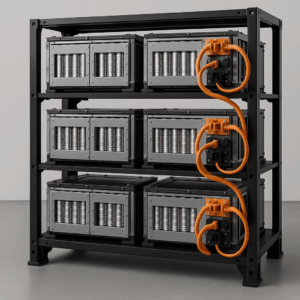
Battery packs are the heart of EVs and many renewable energy systems. Their performance directly impacts vehicle range, charging time, safety, and lifespan. The design must address several challenges:
Batteries generate heat during charging and discharging. Excessive heat can degrade battery life or even cause thermal runaway, leading to safety risks.
Packs need to be lightweight and compact to maximize vehicle efficiency and space.
Mechanical stresses and potential impacts require robust structural design.
Materials and manufacturing processes must be cost-effective without compromising performance.
Balancing all these factors simultaneously is tricky. Simulation-driven optimization helps engineers explore design trade-offs efficiently.
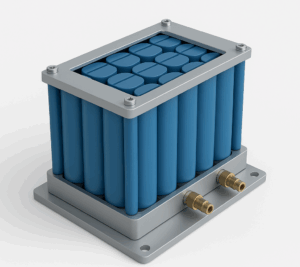
Thermal management is arguably the most critical aspect of battery pack design. Batteries produce heat during charging and discharging, and uneven temperature distribution can accelerate degradation or trigger thermal runaway—a dangerous condition that can cause fires or explosions.
Computational Fluid Dynamics (CFD) is widely used to simulate heat generation and transfer within the pack. Engineers who are specialized in cfd services models airflow patterns, coolant flow through channels, and heat conduction through materials to predict temperature distribution under various operating conditions. This allows optimization of cooling system design, including coolant channel geometry, pump speeds, and fan placement.
By running thermal simulations, designers can prevent hotspots, improve temperature uniformity, and extend battery life without overdesigning cooling systems that add weight and complexity.
Battery packs face a range of mechanical stresses—from vibrations during vehicle motion to impacts during collisions. Structural simulations using Finite Element Analysis (FEA) enable engineers to analyze how different pack configurations respond to these forces.
FEA helps identify areas prone to excessive stress or deformation and supports decisions about material selection, frame design, and mounting methods. By ensuring the battery pack is mechanically robust, designers reduce the risk of failure while potentially lowering weight by eliminating unnecessary material.
At the core of battery pack performance are the individual cells and their electrochemical reactions. Simulation tools model these internal processes to predict capacity, voltage, state of charge, degradation, and thermal behavior at the cell level.
Electrochemical simulations provide insights into how cells age under different loads and environmental conditions. This information guides the design of cell arrangement and pack control strategies that optimize energy output, longevity, and safety.
Battery packs operate under a combination of mechanical, thermal, electrical, and chemical effects. Multi-physics simulation integrates these aspects into a single modeling environment, providing a holistic view of pack behavior.
This comprehensive approach allows for more accurate predictions and better design decisions since interactions between physics domains—like how mechanical deformation affects thermal conductivity or how temperature impacts chemical reactions are captured.
Traditional battery pack development involves multiple physical prototypes; each tested under various conditions. This process is costly and slow. Simulation-driven optimization enables testing hundreds or thousands of virtual designs quickly, drastically shortening development cycles and reducing material and labor costs.
Virtual testing can expose potential failure modes, thermal runaway risks, and mechanical weaknesses early in the design phase. This proactive identification of safety risks helps engineers implement effective mitigation strategies before manufacturing, ensuring compliance with industry standards and regulations.
By fine-tuning design parameters—cell arrangement, cooling system, improves thermal uniformity, and enhances mechanical robustness. This results in battery packs that deliver superior performance over their operational lifetime.
Simulation tools allow engineers that specialized in cfd services to explore unconventional designs, materials, and configurations that might be impractical or too risky to test physically. This fosters innovation and helps accelerate the development of next-generation battery technologies.
Simulation-driven design optimization is transforming battery pack engineering, enabling the development of faster, safer, and more efficient designs. As battery technology advances, these virtual tools will become essential for creating innovative energy storage systems that drive the future of transportation and renewable energy.
By harnessing advanced simulation platforms and optimization algorithms with the help of cfd consulting services, engineers can design battery packs that not only meet but surpass the rigorous demands of today’s applications by paving the way toward a cleaner, smarter, and more sustainable world.
Advanced Engineering Services one of the leaders in the cfd consulting services, We are committed to delivering these cutting-edge solutions, empowering industries with the tools and expertise needed to accelerate innovation, reduce risks, and achieve breakthrough performance in next-generation battery systems.