EV Fire Safety Engineering: Latest Standards & Simulation Approaches (2026 Update)
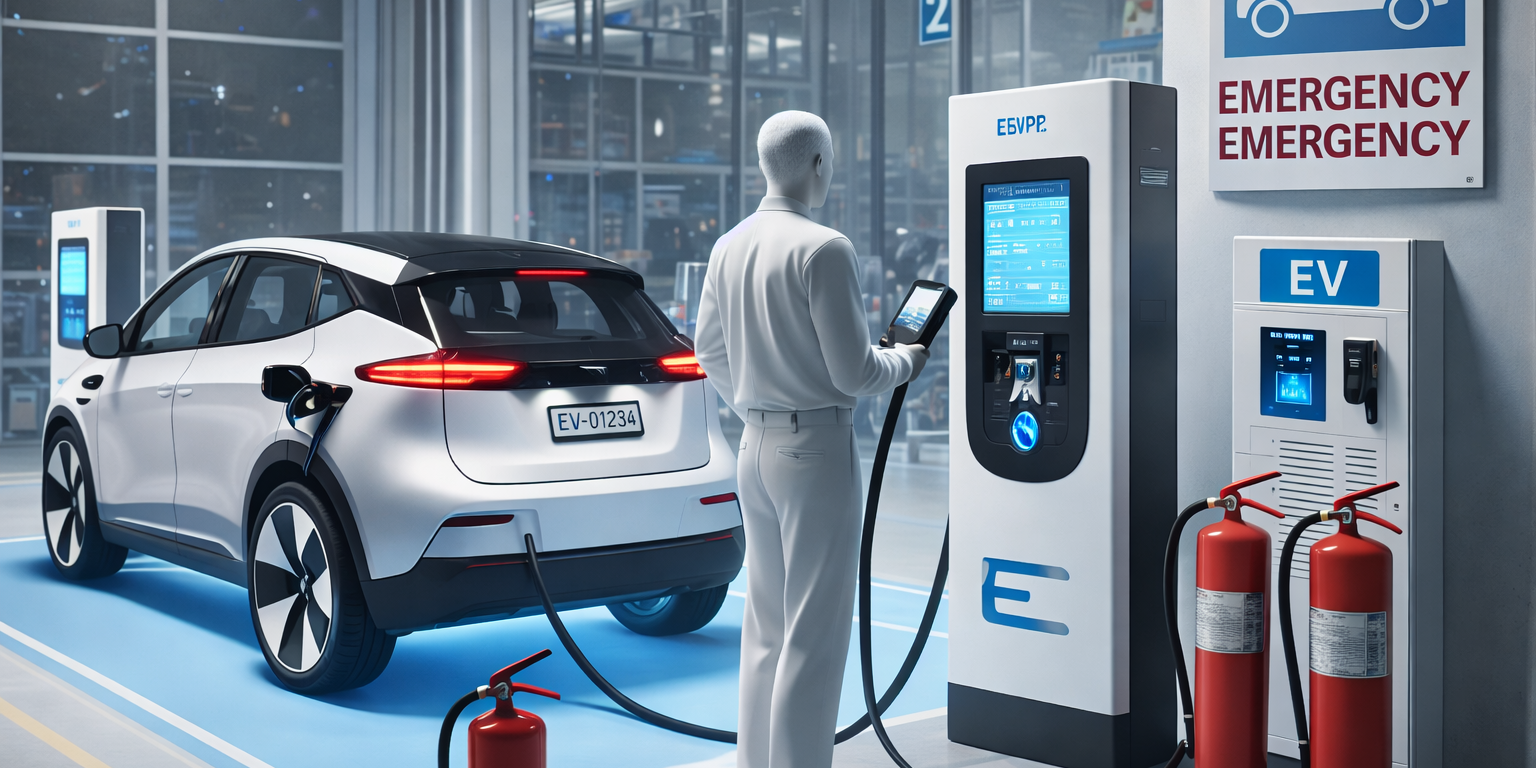
As electric vehicles transition from early adoption to mass-market dominance, fire safety engineering has become a core pillar of EV design. Lithium-ion batteries deliver high energy density and performance, but they also introduce unique hazards such as thermal runaway, rapid heat propagation, and toxic gas release risks that cannot be addressed using conventional vehicle safety strategies.
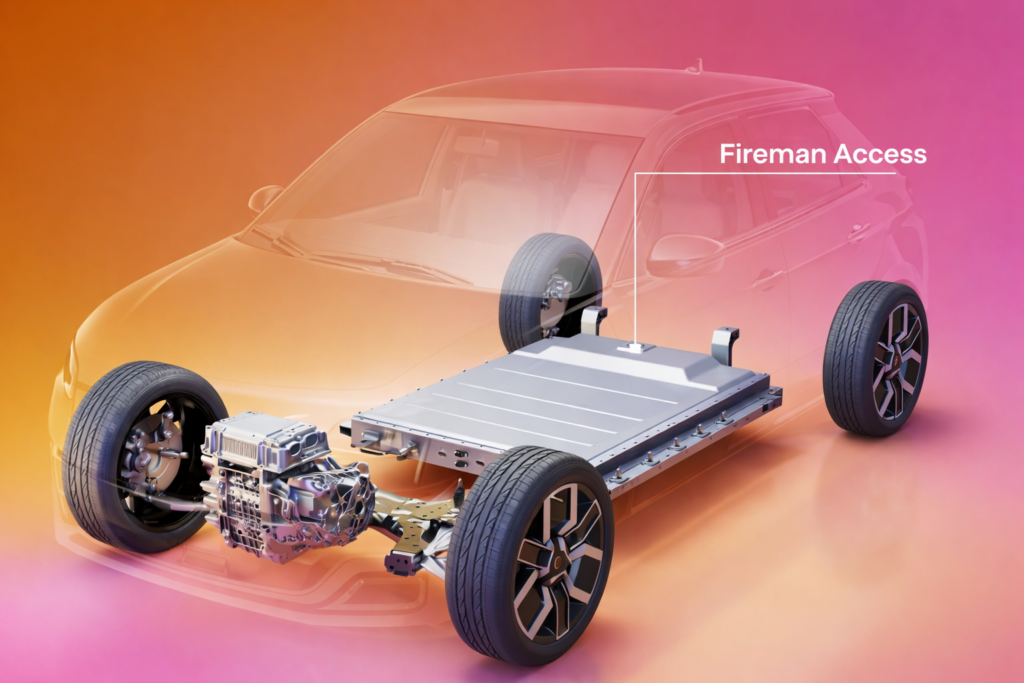
By 2026, EV fire safety is moving beyond basic occupant evacuation requirements toward absolute safety mandates that emphasize thermal containment, fire prevention, and post-crash rescue readiness. This shift is driving new global standards and advanced simulation methodologies that enable engineers to predict, validate, and mitigate battery fire risks at the design stage.
Why Fire Safety is important in EVs
- Thermal Runaway Risk: A single cell failure can cascade across modules, leading to uncontrollable heat release and fire.
- High Energy Density: EV batteries store immense energy in compact volumes, amplifying fire intensity compared to gasoline.
- Passenger Safety & Public Trust: Incidents of EV fires, though rare, attract disproportionate media attention, making robust safety engineering essential for consumer confidence Passenger Safety & Public Trust.
- Regulatory Pressure: Governments and agencies worldwide are tightening compliance requirements, pushing OEMs and suppliers to adopt advanced safety protocols.
Latest Standards in EV Fire Safety (2026 Update)
- ISO & IEC Standards
- ISO 6469-1:2025: Updated to include stricter requirements for thermal propagation testing and venting gas toxicity analysis.
- IEC 62660-4:2025: Introduces standardized abuse testing protocols for prismatic and pouch cells, including nail penetration and overcharge scenarios.
- UNECE Regulations
- UNECE R100 Rev. 3 (2026): Mandates thermal runaway containment testing at the pack level, ensuring that fires remain localized and do not compromise vehicle occupants.
- UNECE R136: Expands hydrogen and EV fire safety requirements, emphasizing post-crash battery integrity.
- US & China Regulations
- FMVSS 305 (US): Updated to require thermal event detection systems integrated with vehicle diagnostics.
- UL 2596 (Enclosure Integrity): Emphasizes battery pack enclosure integrity, requiring designs to withstand extreme heat, high-pressure ejecta, and abrasive particle impact during cell rupture events.
- GB/T 38031-2025 (China): Introduces mandatory fire suppression systems for large-capacity EVs, particularly buses and trucks.
These updates emphasize early detection, containment, and suppression, ensuring EVs meet both safety and performance benchmarks.
Simulation Approaches in EV Fire Safety
1. Computational Fluid Dynamics (CFD)
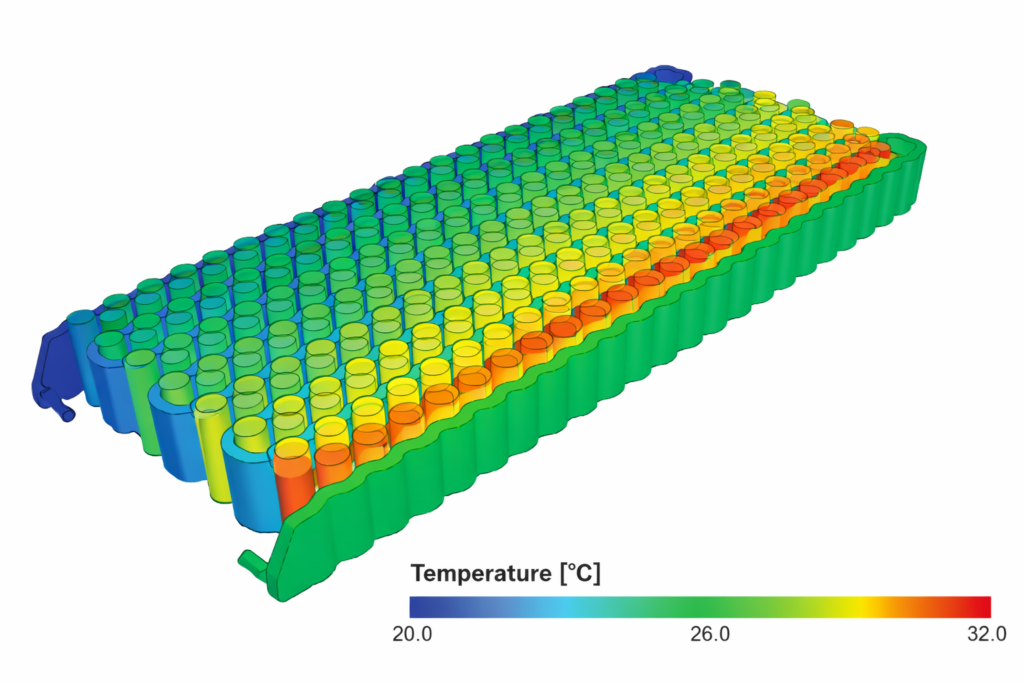
Computational Fluid Dynamics (CFD) serves as a critical simulation tool in EV fire safety by modeling complex gas venting dynamics during thermal runaway, mapping internal heat transfer pathways, and optimizing the placement of fire suppression agents.
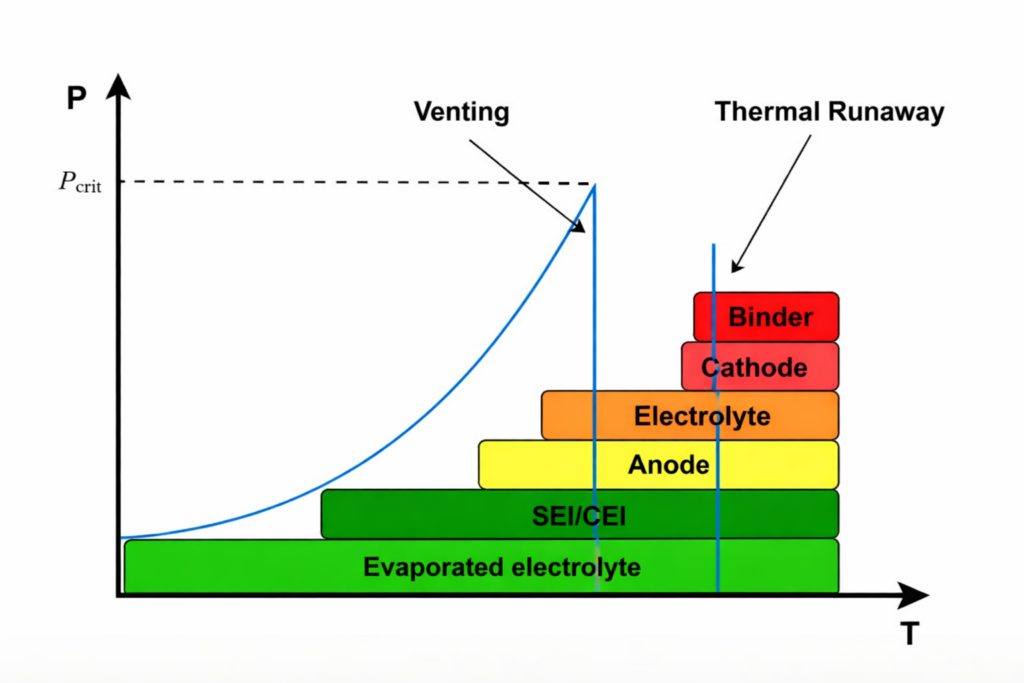
- Gas venting: Predicts pressure buildup and toxic gas direction to design better burst disks and cabin protection
- Heat transfer: Identifies weak links in battery modules to prevent thermal propagation from one cell to the next.
- Fire suppression: Uses flow dynamics to ensure firefighting agents reach the core of a pack during an emergency.
- Finite Element Analysis (FEA)
Finite Element Analysis (FEA) provides a robust computational framework for assessing the physical durability of electric vehicles by simulating the structural response of battery enclosures to extreme thermal and mechanical stresses.
- Thermal-Structural Integrity: Validates the pack enclosure’s ability to maintain its shape and seal during high-temperature fire exposure.
- Deformation Modeling: Predicts how intense thermal stress causes casing creep or warping, which could potentially breach safety seals.
- Crash-fire coupling simulations, integrating mechanical impact with subsequent fire risk.
- Multi-Physics Simulation
The multi-physics simulation enables the prediction of cell degradation pathways that trigger thermal runaway while providing a framework to optimize the design of venting channels, cooling plates, and insulation layers for enhanced battery safety.
- Holistic System Integration: Combines electrochemical, thermal, and mechanical models to capture the chain reaction of battery failure rather than analyzing variables in isolation.
- Predictive Failure Modeling: Identifies specific cell degradation pathways such as lithium plating, SEI layer breakdown, or internal shorts that serve as precursors to thermal runaway.
- Safety-Driven Design Optimization: Venting channels, cooling plates, and insulation layers.
- Digital Twin Technology
The Digital Twin technology bridges the gap between physical battery assets and virtual safety models by leveraging real-time telemetry for predictive fire risk assessment and proactive, fleet-wide maintenance strategies.
- Real-Time Health & Safety Synchronization: Integrates live data from the Battery Management System (BMS) such as cell impedance, voltage fluctuations, and temperature gradients, into predictive models to detect early indicators of thermal runaway.
- Proactive Fleet Management: Enables a transition from reactive repairs to predictive maintenance, allowing operators to isolate high-risk packs and implement fleet-level fire risk strategies before a critical failure occurs.
Engineering Solutions for Fire Safety
- Battery Pack Design
- Cell Spacing & Barriers: Acts as a firebreak to prevent the domino effect of thermal propagation between adjacent cells.
- Thermal Insulation Materials: Ceramic and aerogel layers provide high-temperature resistance.
- Pressure Relief Vents: Direct gases away from passengers.
- Thermal Management Systems
- Liquid Cooling: Most effective for high-capacity packs, ensuring uniform temperature distribution.
- Phase Change Materials (PCMs): Absorb excess heat during abnormal events.
- Active Cooling Integration: Linked with vehicle diagnostics to trigger emergency cooling during early thermal runaway detection.
- Fire Suppression Technologies
- Aerosol-Based Systems: Compact and effective for confined battery enclosures.
- Water Mist Systems: Increasingly adopted in buses and heavy-duty EVs.
- Gas Suppression (Novec, CO₂): Used in specialized applications, though limited by toxicity concerns.
- Early Detection Systems
- Gas Sensors: Detect electrolyte vapors before ignition.
- Thermal Imaging Cameras: Integrated into BMS for real-time hotspot detection.
- AI-Powered Diagnostics: Predict abnormal cell behavior using machine learning.
Challenges Ahead
- Standard Harmonization: Global differences in standards complicate OEM compliance.
- Cost vs. Safety Trade-offs: Advanced suppression systems increase vehicle cost.
- Material Innovation: Development of solid-state batteries and fire-resistant composites.
- AI Integration: Machine learning models for predictive maintenance and anomaly detection.
- Global Harmonization: Aligning standards across regions to streamline EV manufacturing and deployment
- Recycling & Second-Life Applications: Fire safety in reused batteries remains under-regulated.
Conclusion
The 2026 updates to EV fire safety standards and simulation methodologies represent a turning point in sustainable mobility. By combining stringent regulations with advanced engineering simulations, the industry is better equipped to safeguard passengers, infrastructure, and the environment. As EV adoption accelerates, fire safety engineering will remain a cornerstone of innovation and trust in electrified transport.
At Advanced Engineering Services (AESGS), we specialize in delivering cutting-edge simulation solutions for EV safety and performance. Our expertise in CFD, FEA, and electrochemical modeling empowers manufacturers to design safer, more reliable vehicles.
Contact AESGS today to explore how our simulation-driven fire safety engineering solutions can help you meet the latest standards and drive innovation in the EV industry.