Mechanical engineering has always lived at the intersection of imagination and analysis. From hand-sketched blueprints to today’s powerful computer-aided engineering (CAE) platforms, the way engineers design has continuously evolved. For decades, engineers have relied on structured CAD workflows and domain expertise to bring ideas to life. Today, however, Generative Design powered by AI and high-performance computing is redefining what’s possible. The focus is shifting from “building what we can imagine” to “imagining what we can optimize.”
This evolution has sparked a compelling debate: Generative Design vs. Traditional Design. While intuition-driven methods remain the backbone of engineering, generative algorithms now explore thousands of design possibilities in minutes, balancing constraints like performance, sustainability, and manufacturability. The real challenge isn’t choosing one over the other. It’s knowing when to leverage each approach and how simulation tools like CAE, FEA, and CFD can bridge the gap to deliver smarter, faster, and more efficient outcomes.
Traditional design in mechanical engineering relies on human expertise, engineering principles, and iterative refinement. Engineers conceptualize a design based on requirements, apply calculations, and validate through simulation or prototyping.
Key Characteristics:
Example:
Consider designing a heat exchanger. In traditional design, an engineer might start with known tube geometries, apply fluid mechanics equations, and run CFD simulations to optimize flow and heat transfer. The design space is limited to what the engineer imagines and iteratively tests.
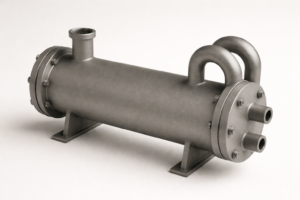
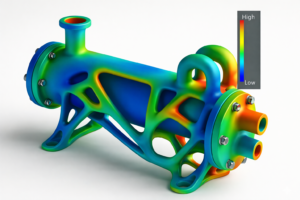
Generative design leverages algorithms and AI to automatically generate multiple design options based on input parameters such as material, load conditions, manufacturing constraints, and performance goals.
Key Characteristics:
Example:
Imagine designing a lightweight bracket for aerospace applications. Instead of manually iterating, engineers define constraints (load paths, material, maximum deflection). The generative design algorithm produces dozens of optimized geometries. Each candidate is automatically tested using FEA for stress distribution. The final design may look radically different from traditional brackets—perhaps resembling bone-like structures—but offers superior strength-to-weight ratio.
Traditional design remains the best choice in the following scenarios:
Example:
Designing a pump casing for industrial use. Traditional design ensures compliance with ASME standards, while CFD validates flow efficiency. Generative design may not add significant value here
Generative design is particularly effective in the following scenarios:
Example:
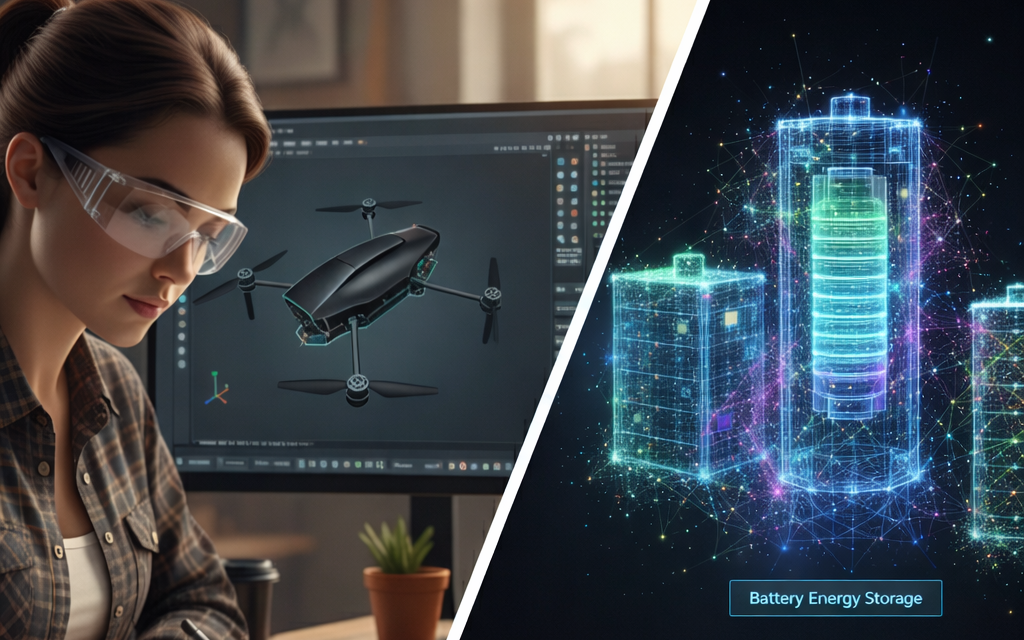
Designing a drone frame. Generative design produces lightweight, organic structures optimized for strength and vibration resistance. FEA validates load-bearing capacity, while CFD ensures aerodynamic efficiency
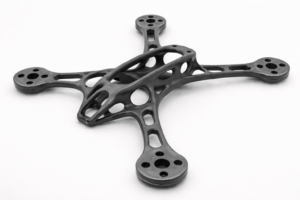
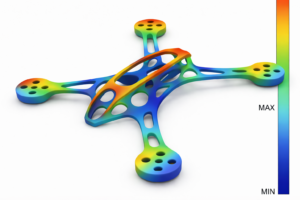
Simulation is the backbone of modern mechanical design workflows. Whether using traditional or generative approaches, simulation tools help engineers validate performance before building physical prototypes.
FEA subdivides a geometry into many small elements and numerically solves equations to predict stress, deformation, natural frequency, buckling, etc. It enables designs to be tested under complex loads without building prototypes.
Traditional Design Example:
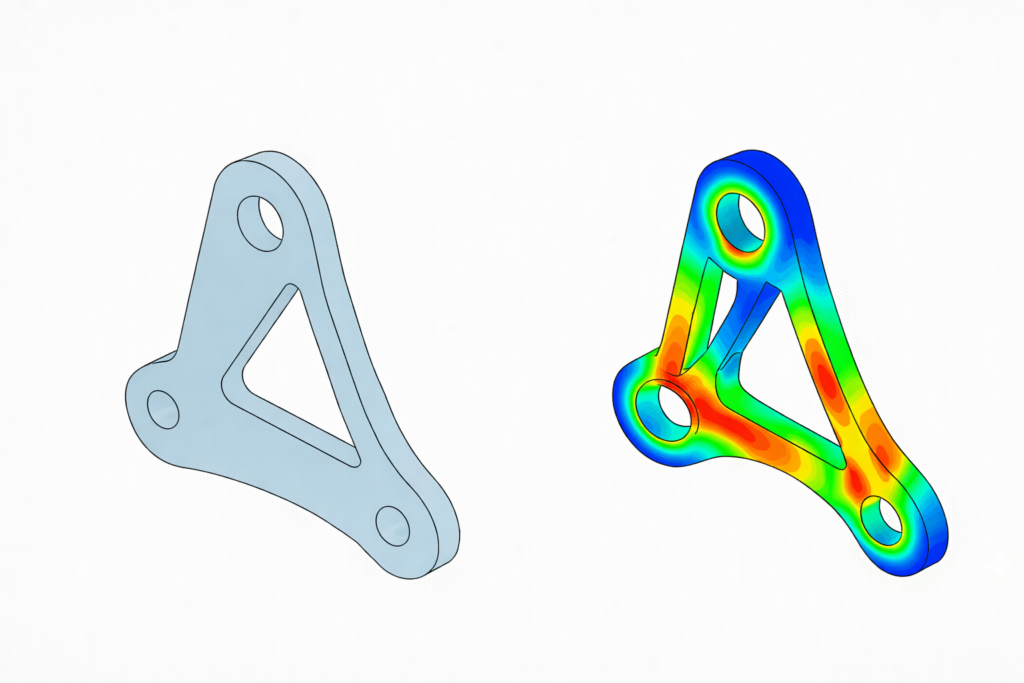
In aerospace component design—such as a wing bracket—engineers develop an initial CAD model, then perform FEA under expected load conditions to evaluate stress hotspots and displacement. Based on results, they adjust fillets, thickness, and reinforcements manually to meet safety standards.
Generative Design Example:
Consider redesigning a suspension control arm. Engineers set weight and stiffness targets along with load cases. The generative tool produces multiple candidate geometries. Automated FEA checks these designs for von Mises stress, fatigue life, and safety factors. The final chosen design may display organic-looking topology that reduces mass while meeting structural criteria.
Note: Generative design often leverages a built-in form of simulation (e.g., lightweight FEA) during generation but may still require detailed FEA validation for certification.
CFD solves fluid flow equations to predict how liquids and gases behave around and inside components. This is crucial for thermal management and aerodynamics.
Traditional Design Example:
A heat exchanger design often starts with heuristic sizing and conventional fin shapes. Engineers model the geometry, apply boundary conditions, and run CFD to evaluate velocity, pressure drop, and heat transfer. Based on the results, fin spacing and shapes are manually adjusted.
Generative Design Example:
For a duct system subject to thermal and pressure constraints, a generative design approach can propose geometry that minimizes flow losses while meeting manufacturing constraints. The algorithm produces multiple configurations. CFD then validates performance. Engineers select the options that strike the best trade-off between pressure drop and system packaging.
In practice, many engineering teams adopt a hybrid strategy:
This approach balances innovation with practicality, ensuring designs are both cutting-edge and manufacturable.
The choice between generative and traditional design is not binary, it’s contextual. Traditional design remains indispensable for standardized, cost-sensitive projects, while generative design shines in innovation-driven, performance-critical applications. By integrating CAE, CFD, and FEA simulations, engineers can confidently navigate this decision, ensuring designs are both groundbreaking and reliable.
For organizations seeking to leverage these methodologies, expert guidance is essential. At AESGS, we specialize in mechanical engineering solutions that combine simulation-driven insights with cutting-edge design methodologies. Whether you’re optimizing a heat exchanger, lightweighting aerospace components, or exploring generative design for additive manufacturing, our team can help you achieve engineering excellence.
Contact AESGS today to explore how our services can accelerate your design journey.